Good Vibes Only: AI Readiness for the Real World
by Favour Patrick ·
“The conversation has definitely moved beyond AI hype. Now it's about redesigning organisations for a world where intelligence is abundant.”
Erik Schwartz, The AI Expert
For businesses, the question about AI is changing. It's less about what the technology can do, and more about where it should be used, what leaders should be careful about, and how teams can experiment without losing control of the outcome.
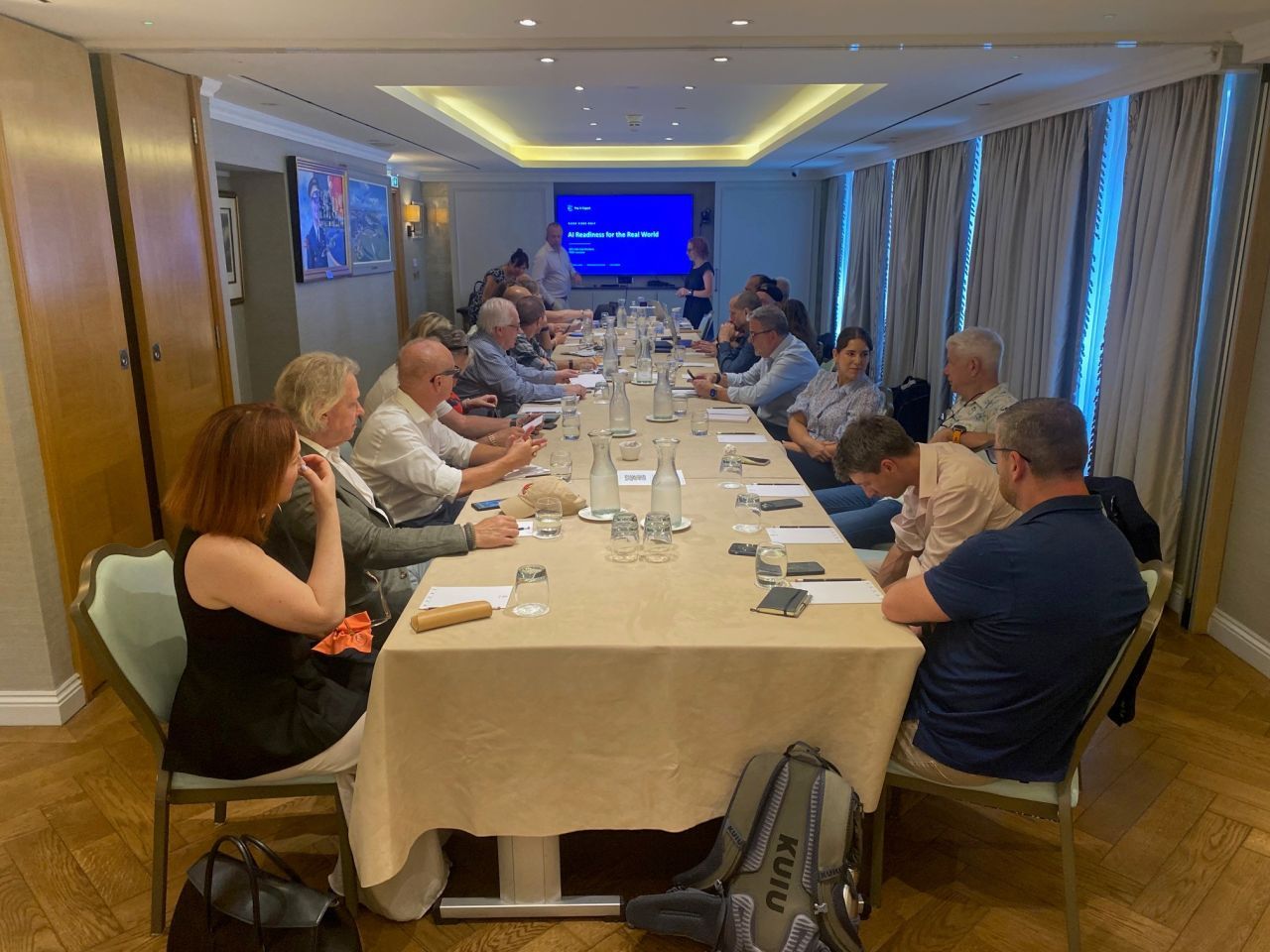
That was the starting point for Good Vibes Only: AI Readiness for the Real World, a half-day workshop held at the RAF Club in London in late July 2026. Co-hosted by Eleni Lialiamou of Kimolian.AI, Erik Schwartz, and Danette Copestake, the session brought senior professionals together around AI readiness, responsible AI adoption, and governance, with people in the room ranging from enthusiasts to sceptics.
From AI Curiosity to a Working Plan
The session was built for leaders who had already moved past the novelty of AI and wanted something more practical: where AI can genuinely help, where it introduces risk, and how to get from curiosity to controlled experimentation without skipping the hard part.
Eleni ran live demonstrations of Lovable, showing how quickly an idea can move toward a working product. She also gave the group a first look at Athena, Kimolian.AI's own AI agent built on Claude, which drew real interest from attendees who wanted to explore it further once the session ended.
What Happens When Building Gets Easier
One of the sharper threads running through the afternoon was what happens to expertise once building gets this accessible. Tools like Lovable are putting the ability to create a working product into the hands of business leaders and domain experts who would previously have needed a specialist engineering team behind them.
That's a real opportunity, and a real responsibility at the same time. Knowing how to build something isn't the same as knowing whether it should be built, how it should be structured, or what happens once people start relying on it. Erik Schwartz, reflecting on the day afterwards, put it directly: the distance between having an idea and shipping something useful has collapsed, but experience, architecture, judgement, and governance matter more now, not less, because of it.
Governance Has to Start Before Deployment, Not After
Danette Copestake led the session's discussion on AI governance, covering data sovereignty, the EU AI Act, and ISO 42001, and the practical gap between having good intentions around responsible AI and actually building a system that holds those intentions accountable.
Fergus Boyd, an attendee who wrote about the day afterwards, summed up the core principle plainly: responsibility for what a system does sits with the company using it, not the model itself, and every prompt sent into an AI tool is effectively a disclosure decision. Danette made a similar point in her own recap: AI doesn't remove accountability, it amplifies it. The organisations that come out ahead won't be the ones adopting AI fastest. They'll be the ones that build quickly, govern carefully, and deploy with judgement.
Dashboards Show. Agents Act.
Another distinction shaped part of the session: the difference between a dashboard, which shows what's happening with a business's data, and an AI agent, which can act on that data directly, interpreting it, recommending a next step, or moving work forward without waiting to be asked.
That difference is exactly why oversight has to scale alongside capability rather than trail behind it. The more a system moves from showing information to acting on it, the more the questions of permissions and accountability matter.
Speed Without Understanding Is Its Own Risk
The accessibility of AI-assisted building tools brought a useful dose of caution into the room too, captured in a comparison that landed as both a joke and a warning: vibe coding is like putting a five-year-old behind the wheel of a toy car on the motorway. Being able to produce something quickly is a different skill from understanding its architecture, its data requirements, or what could go wrong once it's live.
AI Cannot Fix a Broken Process
A simpler point ran underneath all of it: AI cannot repair a broken foundation. An organisation with unclear responsibilities or messy data doesn't solve those problems by adding AI on top. It just makes the same problems move faster. Before deciding what to automate, leaders need an honest read on how work actually happens and where AI can genuinely improve an outcome, rather than just accelerate one that already doesn't work.
What AI Readiness Actually Requires
By the end of the afternoon, AI readiness had less to do with which tools a business had access to, and more to do with judgement: where AI creates real value, where it introduces risk, what needs a person's decision, and what has to be in place before any of it scales.
For Kimolian.AI, that's the practical core of AI adoption work: helping organisations move from interest into meaningful experimentation, with responsibility and human judgement built in from the start rather than added afterwards.
Thank you to Erik Schwartz and Danette Copestake for co-hosting.

Favour Patrick
Favour Patrick has a background in economics and works in the product and AI space. Through product research, product thinking, content, and AI-enabled workflows, she tells stories about the people building better products and businesses
LinkedIn →